
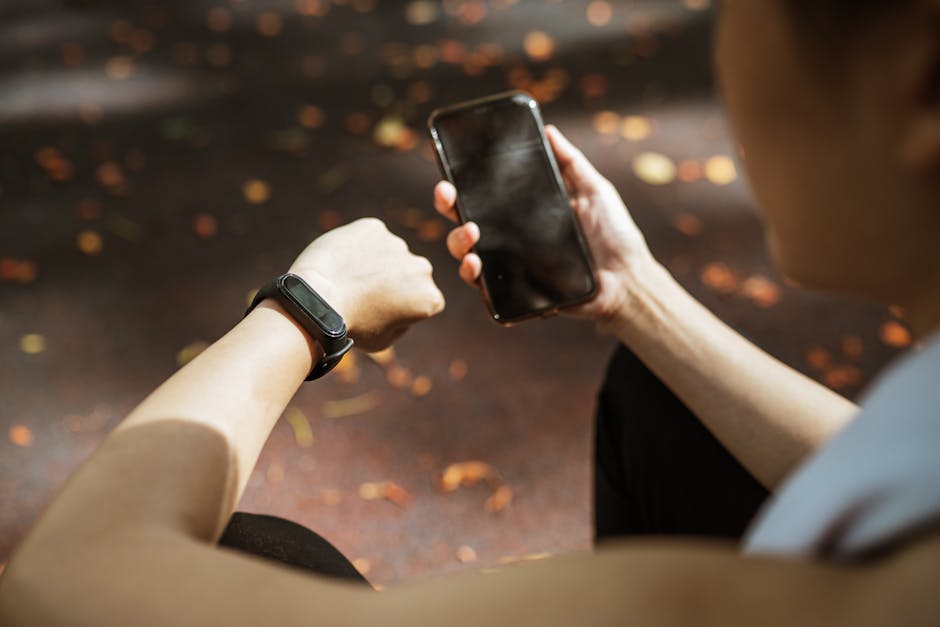
Closing an activity ring shows that your body moved enough to satisfy a device’s activity model. It cannot establish that you completed the specific workout quest you chose, because the watch does not know the movement, duration, form, or outcome your quest required.
In September 1999, NASA’s Mars Climate Orbiter approached Mars after a journey of hundreds of millions of kilometers. The navigation data looked precise. Yet one part of the system produced measurements in pound-force seconds while another expected newton-seconds.
The spacecraft entered much lower than planned and was lost.
NASA’s Mars Climate Orbiter Mishap Investigation Board, chaired by Arthur Stephenson, documented the unit mismatch in its Phase I report. The numbers existed. They had been tracked and transmitted. Their meaning did not match the mission’s intent.
A closed activity ring creates a smaller version of the same measurement problem. The number may be accurate while supporting the wrong conclusion.
Activity totals remove the details your quest depends on
Suppose a student creates this quest:
“Complete three sets of eight controlled goblet squats.”
Later, their watch reports enough movement to close an activity ring. That activity might include walking across campus, climbing stairs, carrying groceries, playing basketball, or doing the planned squats. The total cannot tell those possibilities apart.
Even when the watch labels part of the day as a workout, the category can remain broader than the quest. A recorded strength session does not establish which exercise happened, how many sets were completed, or whether each repetition followed the intended tempo.
This matters because quests are commitments with boundaries. “Move today” and “complete three controlled sets” ask for different actions. If either can claim the same proof, the more specific quest loses its meaning.
The problem comes from interpretation, not necessarily sensor accuracy. Heart rate, steps, active minutes, and estimated energy expenditure can be useful signals. Each answers a question the device was designed to answer. None automatically answers, “Did this person complete the exact quest they created?”
Match evidence to the claim
A good verification method should cover the important part of the claim without pretending to know more than it can observe.
For a general quest such as “take a brisk walk after class,” activity data may be relevant. For “practice five slow push-ups while keeping my elbows controlled,” a daily movement total leaves out the defining action.
LifeQuest handles that gap by offering verification methods that fit different quests. A student can submit a camera photo for AI plausibility review when a visible result makes sense. A timed focus quest can use elapsed server time. A qualifying coding quest can use a GitHub push made after the quest was created.
When objective proof is impractical, honest self-report remains available for half XP. That option matters. Some worthwhile actions resist clean measurement, and forcing weak evidence into a strong-proof label would create false confidence.
A photo also has limits. It can support the plausibility of a visible moment or result, but it cannot reconstruct an entire workout. [The one workout photo LifeQuest accepts](\/blog\/the-one-workout-photo-lifequest-accepts-and-what-it-still-cannot-prove-dac4bf6c\/) explains where that boundary sits.
Coaching and proof serve different jobs
A 60-second exercise recording can reveal more about form than an activity ring. LifeQuest can return asynchronous AI coaching with a summary, cues, and concerns. That feedback may help a student notice knee position, pacing, or another visible aspect of the movement.
It still serves a different purpose from quest verification.
Coaching asks, “What can you improve in this sample?” Proof asks, “What evidence supports completion of the agreed task?” Combining those questions would encourage the system to treat a useful form clip as proof of an entire session.
LifeQuest keeps form coaching separate from XP and completion. The distinction protects both functions. Feedback can stay focused on learning, while XP reflects the evidence attached to the quest. The [60-second form check](\/blog\/the-60-second-form-check-that-can-correct-you-without-taking-your-xp-3a4d7503\/) goes deeper into that separation.
AI review also has a defined ceiling. It can assess plausibility from submitted media. It is not fraud-proof, and it does not replace a qualified coach or medical professional.
Write quests that can be evaluated honestly
Before starting a workout quest, identify the smallest honest claim you want to make afterward.
“Exercise tonight” leaves plenty of room for interpretation. “Complete my planned upper-body session” is clearer, although proof may still rely on self-report. “Record one set of push-ups for form feedback” defines an observable action, but the recording should not claim the rest of the workout happened.
Then choose evidence that fits that claim. If no available method covers it, use self-report and take half XP. A smaller honest reward preserves the value of the progression system better than full XP attached to unrelated activity.
The Mars Climate Orbiter carried measurements all the way to Mars, but incompatible meanings made those measurements dangerous. Your watch can carry accurate activity totals to your wrist. The final interpretation still depends on whether the signal matches the quest you actually chose.
Comments
No comments yet.